
Honestly, when we first saw the $650 million headline, our initial reaction was the same one most homeowners probably had: "What does that mean for my taxes?" It's a fair question, and the answer is a little more layered than the news coverage suggests.
Here's the short version: San Antonio is considering two separate infrastructure proposals, not one. They're being planned together, but they work differently, they're approved differently, and they affect your wallet differently. And right now, nothing is final.
We work with buyers, sellers, and homeowners across San Antonio every day, so we want to break this down in plain terms. No jargon, no spin.
All information reflects what was publicly available as of November 2026. Project lists, proposed fees, and timelines are still subject to City Council action.
Key Takeaways
Two separate proposals: A $442 million general obligation bond and a $208 million stormwater initiative are being planned at the same time but follow completely different approval and funding paths.
No property-tax-rate increase proposed: The City isn't proposing a higher tax rate to fund the bond, but your actual tax bill still depends on your home's appraised value.
Stormwater costs are different: The drainage proposal would increase your SAWS utility bill, not your property tax. Those are separate line items entirely.
Nothing is approved yet: Project lists are still preliminary. Committees submit recommendations in January 2027, and a potential election is set for May 1, 2027.
Voters decide the bond. City Council decides the stormwater fee. Two proposals, two different decision-makers.
Public input is still open: You can comment online at SASpeakUp.com/2027Bond or attend meetings through mid-December.
A project on a proposed list isn't a promise. It's a starting point for a much longer process.
What Is in San Antonio's Proposed Bond Program?
On November 13, 2026, the City of San Antonio announced it's planning a 2027-2032 Bond Program alongside a separate stormwater initiative. Together, they add up to $650 million in potential investments across streets, parks, housing, facilities, and drainage.
Here's how the proposed funding breaks down:
Category | Proposed Funding | How It's Financed |
|---|---|---|
Streets, Bridges and Sidewalks | $234.82 million | General obligation bond |
Parks and Recreation | $97.67 million | General obligation bond |
Municipal Facilities | $59.51 million | General obligation bond |
Affordable Housing | $50 million | General obligation bond |
Drainage and Flood Control | $208 million | Stormwater revenue bond |
The $442 million general obligation bond covers long-term public infrastructure. Think road repairs, sidewalk improvements, park upgrades, and public facilities. These are projects the City expects to serve residents for decades.
The $208 million drainage portion is a completely separate proposal. It won't go on a ballot. City Council votes on it independently, and it would be funded through stormwater fees, not property taxes. We'll get into that below.
Worth saying again: these are proposed numbers, not approved budgets. Four Community Input Committees are actively reviewing these projects right now, and their recommendations go to City Council in January 2027.
How Could the Bond Proposal Affect Homeowner Costs?
This is the question we hear most, and it deserves a straight answer.
On property taxes: The City is not proposing a higher tax rate to fund the $442 million bond. The proposed debt-service rate stays at $0.21 per $100 of taxable value. But here's the part that trips people up: a stable rate doesn't mean a stable tax bill. If your home's appraised value goes up, you'll pay more even if the rate doesn't change. Those are two different things.
On your SAWS bill: The $208 million drainage proposal is where your utility costs come in. A Storm Water Utility Fee increase is being proposed to fund those flood-control and drainage projects. The City hasn't published an adopted fee schedule yet, so the exact dollar impact on your monthly bill isn't set. Keep an eye on this one as Council deliberates.
A few things worth keeping in mind as a homeowner:
Your total tax bill involves more than the City rate. Bexar County, your school district, and other taxing entities each set their own rates. The City controls only its slice.
Appraised value is often the bigger driver. In an active market, your bill can increase even when rates stay flat.
Utility fees and bond debt are billed separately. One hits your tax statement, the other hits your SAWS bill. Don't add them together as if they're the same thing.
What Could Bond Projects Mean for San Antonio Neighborhoods?
This is where things get practical, especially if you're buying, selling, or just trying to figure out what's happening on your street.
The preliminary project lists include a mix of construction-ready work and design-only allocations. For example, there's roughly $4 million proposed for design only on McCullough Avenue from Basse to Loop 410. That means planning and engineering, not construction crews showing up next spring. Meanwhile, the Old Highway 90 corridor from Highway 151 to Leon Creek has closer to $10 million proposed for actual construction, targeting roadway, pedestrian access, and flooding concerns.
That difference matters a lot if you're evaluating a property nearby.
If a proposed project is close to a home you're considering, here are the questions we'd want answered:
Is this construction or design only? Design funding doesn't mean shovels in the ground anytime soon.
Is this a new project or a continuation? Some projects carry over from the 2022-2027 Bond Program and are already underway.
Does it need additional funding to move forward? Some projects rely on federal, county, or matching funds that aren't guaranteed.
How will construction affect daily access? Road and drainage work can disrupt driveways, parking, and traffic for months.
Does it address a flooding concern? For homes near drainage improvements, that context matters for insurance, habitability, and long-term buyer interest.
We're not saying a nearby bond project automatically adds value to a home. What we are saying is it changes the conversation. Some improvements genuinely make a neighborhood more livable. Others take years to show up. Knowing which one you're dealing with helps you make a better decision.
What Happens Before San Antonio Voters Decide?
Here's the timeline from where we are now to a potential ballot:
Now through December 2026: Four Community Input Committees hold public meetings, reviewing proposed projects and community priorities.
January 21, 2027: Committees submit final recommendations to City Council.
February 2027: City Council is expected to consider calling a bond election.
May 1, 2027: Anticipated election date, subject to Council action.
The stormwater initiative runs alongside this but on a separate track. City Council votes on that one directly. No public ballot required.
One thing that often surprises people: voters likely won't approve one giant lump sum. Bond elections are typically broken into separate propositions by category, so you could vote yes on streets and no on parks, or any other combination. The final ballot structure hasn't been set, but that's the expected format.
How Can San Antonio Residents Share Input?
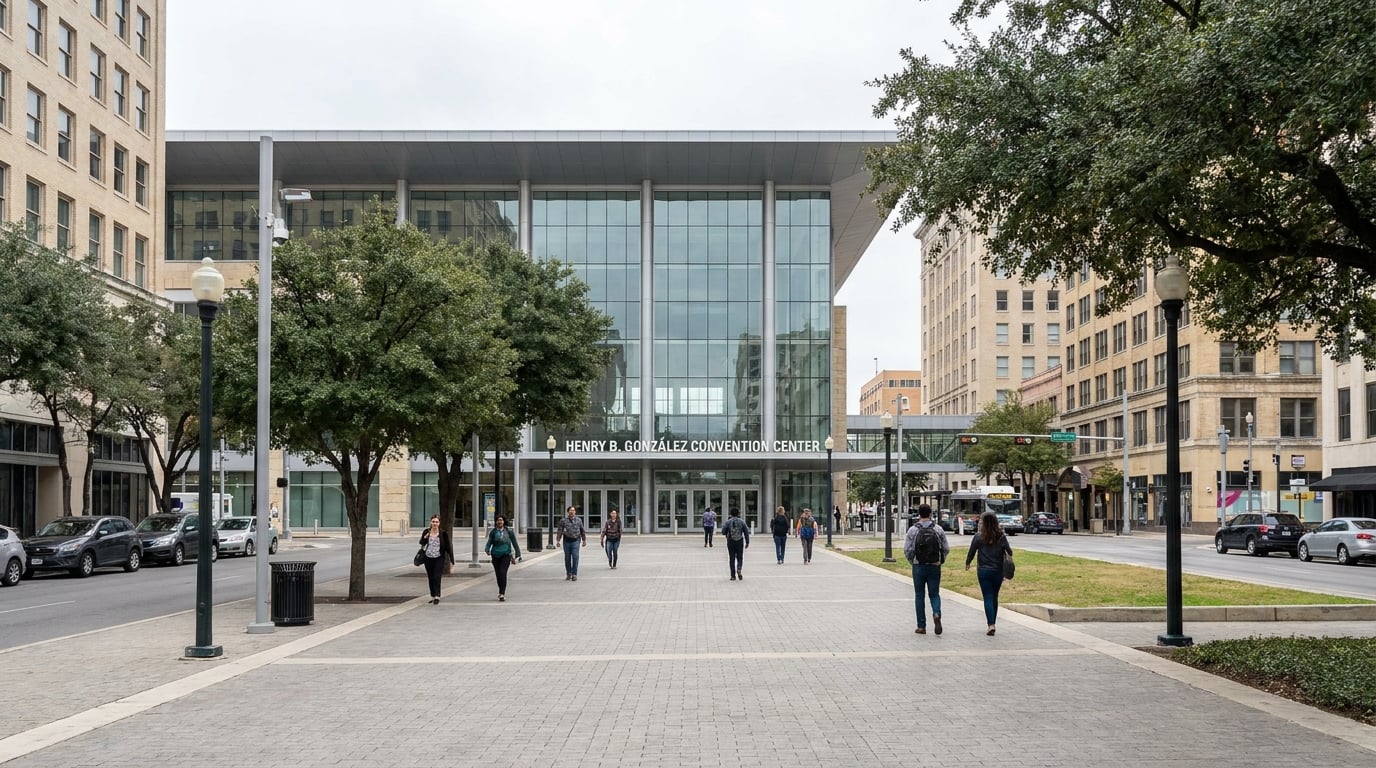
Public meetings kicked off November 16 and run through mid-December. All sessions are from 6 to 8:30 p.m. at the Henry B. González Convention Center, 900 E. Market Street.
Remaining meetings:
Parks and Municipal Facilities: November 30, December 14
Streets, Sidewalks and Bridges: December 1, December 15
Drainage and Flood Control: December 2, December 16
Affordable Housing: December 3, December 17
Can't make it in person? Every session is livestreamed on the City of San Antonio's YouTube channel. You can also submit feedback online at SASpeakUp.com/2027Bond, or pick up paper comment cards at public libraries, community centers, senior centers, and Council District offices through December 4.
If you want your input to actually land, be specific. Name the intersection. Describe how often the problem happens. Mention how many households it affects if you know. General statements are easy to overlook. Specific, grounded feedback is harder to ignore.
If you're buying or selling near a proposed project and want to talk through what it actually means for that specific property, that's a conversation we're glad to have. Reach out anytime.
Frequently Asked Questions
Can Bond Money Pay for Routine Maintenance or Employee Salaries?
No. General obligation bond funds cover capital improvements like construction and infrastructure, not ongoing operations, maintenance programs, or City staff costs.
Does Appearing on a Preliminary List Guarantee Project Funding?
It doesn't. Projects still need committee recommendations, Council approval, and in most cases a successful voter election before any funding is confirmed.
What Does "Design Only" Mean on a Proposed Project List?
It means the funding covers planning and engineering work, not construction. A design phase often comes years before a later bond cycle or additional funding brings a project to build.
Will Voters Decide the Entire Bond Program With One Vote?
Likely not. Bond elections are typically structured by proposition category, meaning voters would see separate yes or no questions for streets, parks, housing, and facilities. The final structure is still pending.
When Could Approved Bond Projects Begin Construction?
It varies. Even after voter approval, projects still need completed designs, contractor procurement, and sometimes land acquisition. Some could break ground within a year or two; others may take longer depending on complexity.
Check out this article next