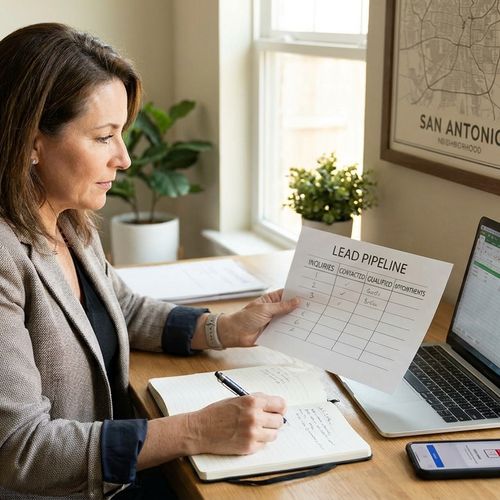

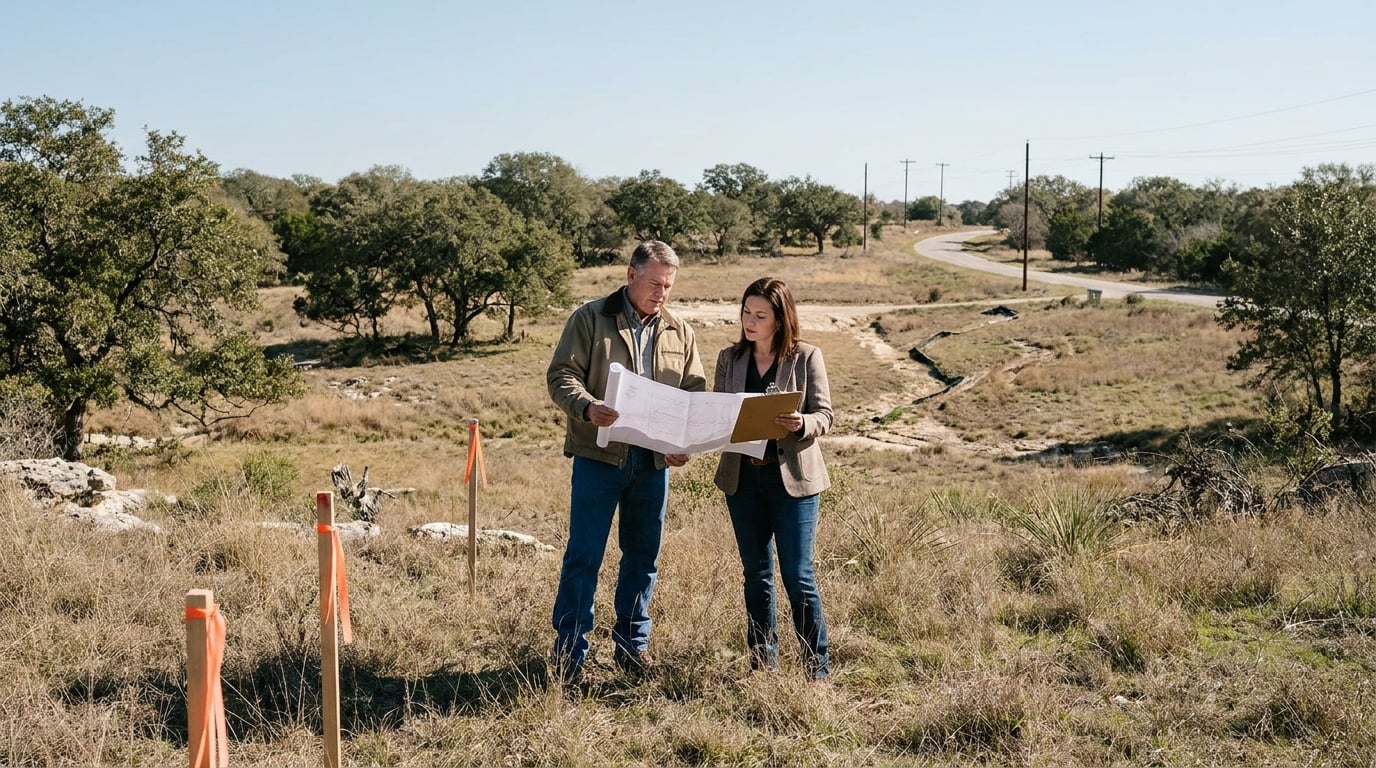
There's something exciting about a piece of raw land. No walls, no layout, no someone else's design choices. Just possibility. We get it. We've seen that look on a buyer's face when they're standing in the middle of an open parcel, already picturing where the house goes.
But land is tricky in ways that homes aren't. What you see on the ground and what the records say can be two very different things. We've walked parcels that looked perfect and had no legal access. Others had utilities "nearby" that would've cost $40,000 to actually connect. A few had deed restrictions that made the buyer's entire plan impossible.
This checklist exists so that doesn't happen to you.
Note: Some local agency data referenced below reflects 2024 guidance where 2025-specific updates were not yet available.
Key Takeaways
Jurisdiction changes everything: Land in San Antonio city limits, the ETJ, and unincorporated Bexar County each follow different rules for zoning, permits, and what you can build.
"Unrestricted" is not a free pass: Private deed restrictions, floodplain overlays, and aquifer rules can all apply even when there's no formal zoning.
A road you can see is not the same as legal access: Recorded access is what matters, and not every parcel has it.
Utilities nearby is not utilities ready: Feasibility and cost are separate questions from availability.
Floodplain land isn't automatically a no: It may require extra permits and engineering, but it's not always a dealbreaker.
The Edwards Aquifer adds a layer most buyers don't see coming: Development in regulated zones requires review through TCEQ.
Budget well past the sale price: Clearing, grading, septic, and permits can add significant cost before a single wall goes up.
Protect your option period: Land due diligence takes longer than a standard home purchase. That timeline is negotiable, and it's worth protecting.
Can the Land Support Your Planned Use?
Start here, before anything else. The most important question isn't "do I like this land?" It's "can this land actually do what I need it to do?" A parcel that works for a custom home may not work for a manufactured home, a short-term rental, or running a few head of cattle. Get clear on your plan first, then verify whether the land supports it.
1. Check Jurisdiction, Zoning, and Platting
This is the first call we make on any parcel. Where the land sits legally shapes everything else.
San Antonio's Development Services Department has maps showing city limits, ETJ boundaries, zoning, and overlay districts. Land inside city limits is zoned. Land in the ETJ (the buffer zone extending up to five miles outside city limits) isn't zoned, but platting rules still apply. Land in unincorporated Bexar County generally has no public zoning at all.
None of that means you can do whatever you want. Setbacks, minimum lot sizes, platting requirements, and use rules still exist depending on the jurisdiction. And an unplatted parcel can create real problems with permitting and financing.
City of San Antonio: Zoning, platting, and development standards apply through the DSD.
ETJ: No zoning, but subdivision and platting rules still apply.
Unincorporated Bexar County: No zoning, but deed restrictions, floodplain rules, and state/county permits still apply.
2. Check Deed Restrictions and HOA Rules
This one surprises people, especially on parcels that look rural or remote. Even land with zero zoning can carry private deed restrictions recorded in the title. And those restrictions are binding on whoever buys the property.
Before making an offer, ask for any recorded restrictions and actually read them. Common ones cover:
Minimum home size or required construction type
Whether manufactured or modular homes are allowed
Livestock or agricultural use
Short-term rentals or any commercial activity
Additional units or lot splits
Some are old and rarely enforced. Others are actively watched. Either way, they come with the land whether you knew about them or not.
Do the Records Match the Land You Expect to Buy?
What a seller describes and what the documents say don't always line up. This section is about closing that gap before you close on the property.
3. Check the Survey, Boundaries, and Title
A current survey tells you where the property actually begins and ends. Not the fence line. Not the tree line. The survey. We've seen buyers assume they're getting acreage that turned out to belong to a neighbor once someone actually measured.
The title commitment shows recorded liens, easements, and exceptions to coverage. Title insurance protects against certain claims, but it doesn't cover everything. As Texas Department of Insurance guidance points out, the policy's legal description should be compared directly against the survey. Any gaps between them are worth flagging before closing.
If the seller offers an older survey, ask your title company and lender whether it's acceptable. Changes to the land or adjacent parcels since that survey was done may not appear in it.
4. Check Easements, Access, and Mineral Rights
Legal access means a recorded right to reach the property from a public road. A dirt path you can drive on is not that. If a parcel is landlocked without a recorded easement, it may be very difficult to build on and even harder to sell later.
Also check where utility easements cross the parcel. Those can limit where structures can go.
Mineral rights in Texas are worth a separate conversation. If the seller doesn't own them, or if they've been severed, a third party may have the right to access the surface. It's worth talking to a real estate attorney before closing on any parcel where mineral rights are unclear.
Can the Site Support Construction and Utilities?
The land can be legally clear, free of restrictions, and still not physically work for what you're planning. This is the part buyers often skip, and it's where some of the most expensive surprises show up.
5. Check Floodplain, Drainage, and Buildable Area
Flood maps are a starting point, not a final answer. A parcel can straddle multiple flood zones, and the portion you can actually build on may be much smaller than the total acreage.
Land in a Special Flood Hazard Area (the 100-year floodplain) isn't automatically off the table. But Bexar County requires a floodplain development permit for construction near or within those areas, and that process may involve engineering review and elevation certificates. The real question is how much of the parcel is usable and what it'll cost to build there responsibly.
6. Check Soil, Slope, Trees, and Aquifer Rules
San Antonio sits at the edge of the Hill Country, and soil conditions vary more than most buyers expect. Expansive clay, shallow rock, and steep slopes all affect what kind of foundation you'll need and what grading will cost. A soil study before closing can save a lot of money and stress later.
The Edwards Aquifer is a specifically local issue. Land in recharge, transition, or contributing zones falls under TCEQ oversight. Development in those areas may require an Edwards Aquifer Protection Plan, which limits impervious cover and adds a water quality review step. It's not usually a dealbreaker, but it does add time and sometimes cost that buyers from outside the area rarely anticipate.
7. Check Water, Sewer, and Septic Feasibility
"Utilities available" in a listing can mean almost anything. Here's how we break it down:
Public water/sewer: Confirm with SAWS whether the parcel can actually connect, whether capacity is reserved, and what connection fees look like. Availability doesn't always mean the connection is easy or cheap.
Private well: Requires a permit and may be subject to aquifer restrictions. Test for both yield and water quality before closing.
Septic system (OSSF): If public sewer isn't accessible, the land needs to support an on-site sewage facility. Bexar County requires permits for all OSSF systems, and a site evaluation by a licensed engineer is worth doing during the option period, not after closing.
Septic feasibility depends on soil type, lot size, setbacks, and what you're planning to build. A failed site evaluation after closing is a hard lesson.
8. Check Electric Service, Gas, and Internet
CPS Energy covers most of San Antonio and surrounding areas, but service territory boundaries still matter. Confirm the parcel is in the right coverage area and get a written quote on any extension or new service installation. Extensions take time and can require an easement across a neighboring property.
Gas and internet are worth confirming separately. Neither is guaranteed on rural or semi-rural parcels, and both affect how livable and resaleable the land will be as an investment.
What Will the Land Cost Beyond the Sale Price?
The purchase price is just the beginning. What it actually costs to get to a buildable, connected, permitted lot is a different number, and buyers who don't plan for it often get caught short.
9. Check Site Work, Permits, Taxes, and Ownership Costs
Beyond the land itself, budget for:
Clearing and grading: Costs vary based on tree density, rock, and slope.
Driveway and culvert: May require a county road permit and an engineered drainage plan.
Survey and engineering fees: Often required before permits are issued.
Permits: City, county, state, or some combination depending on jurisdiction.
Property taxes: Taxed at market value unless an agricultural or wildlife valuation applies.
That last point deserves attention. If the parcel currently carries an ag exemption and you purchase it without continuing agricultural use, Bexar Central Appraisal District can assess rollback taxes going back up to five years. That liability transfers to you as the new owner.
10. Check Financing, Deadlines, and Exit Plans
Land loans work differently from home loans. Down payments are typically higher, often 20 to 30 percent, terms can be shorter, and not every lender offers them. If you're planning to build, a construction-to-permanent loan may be a smarter path than a standalone land loan.
The option period in a Texas land contract is negotiable. We typically suggest requesting enough time to complete soil testing, a septic evaluation, utility confirmations, and a full title review. A standard 10-day window is often not enough on a complex parcel.
Also think through your exit plan. If your plans change, who's the eventual buyer? How long can you carry the costs if development takes longer than expected? These aren't fun questions, but they're the right ones to ask before you're under contract.
Who Can Verify San Antonio Land Information?
Contact | What They Verify |
|---|---|
San Antonio Development Services (DSD) | Zoning, platting, permits within city limits and ETJ |
Bexar County | Floodplain permits, septic permits, road access |
TCEQ | Edwards Aquifer zone and protection plan requirements |
SAWS | Water and sewer availability and connection feasibility |
CPS Energy | Electric service territory and extension quotes |
Bexar Central Appraisal District (BCAD) | Tax valuation, ag exemption status, rollback exposure |
Licensed surveyor | Boundaries, encroachments, legal description |
Title company | Recorded easements, liens, title exceptions |
Licensed engineer or soil professional | Septic site evaluation, geotechnical conditions |
Real estate attorney | Deed restrictions, mineral rights, access easements |
We work with buyers across San Antonio and can help connect you with the right professionals for each step. If you're looking at a parcel and want a second opinion before making an offer, we're happy to take a look. Reach out to us at Exquisite Properties.
Frequently Asked Questions
Can I Add Utilities After I Buy Vacant Land?
Yes, but confirm feasibility and get cost estimates before closing. Extension fees, easement requirements, and provider timelines can significantly affect whether the investment still makes sense.
Does Floodplain Status Make Bexar County Land Unbuildable?
Not automatically. Some floodplain parcels can be developed with the right engineering and a Bexar County floodplain development permit, but the buildable area and total cost depend on site-specific conditions.
Do I Need a New Survey if the Seller Has an Old Survey?
Possibly. Older surveys may not reflect current easements, adjacent parcel changes, or new recorded instruments. Your lender and title company will generally weigh in on whether the existing survey is acceptable.
Can I Place a Manufactured Home or RV on San Antonio Land?
It depends on the jurisdiction, any recorded deed restrictions, local ordinances, utility connections, and septic permitting. Confirm all of these before purchasing with that use in mind.
Check out this article next