

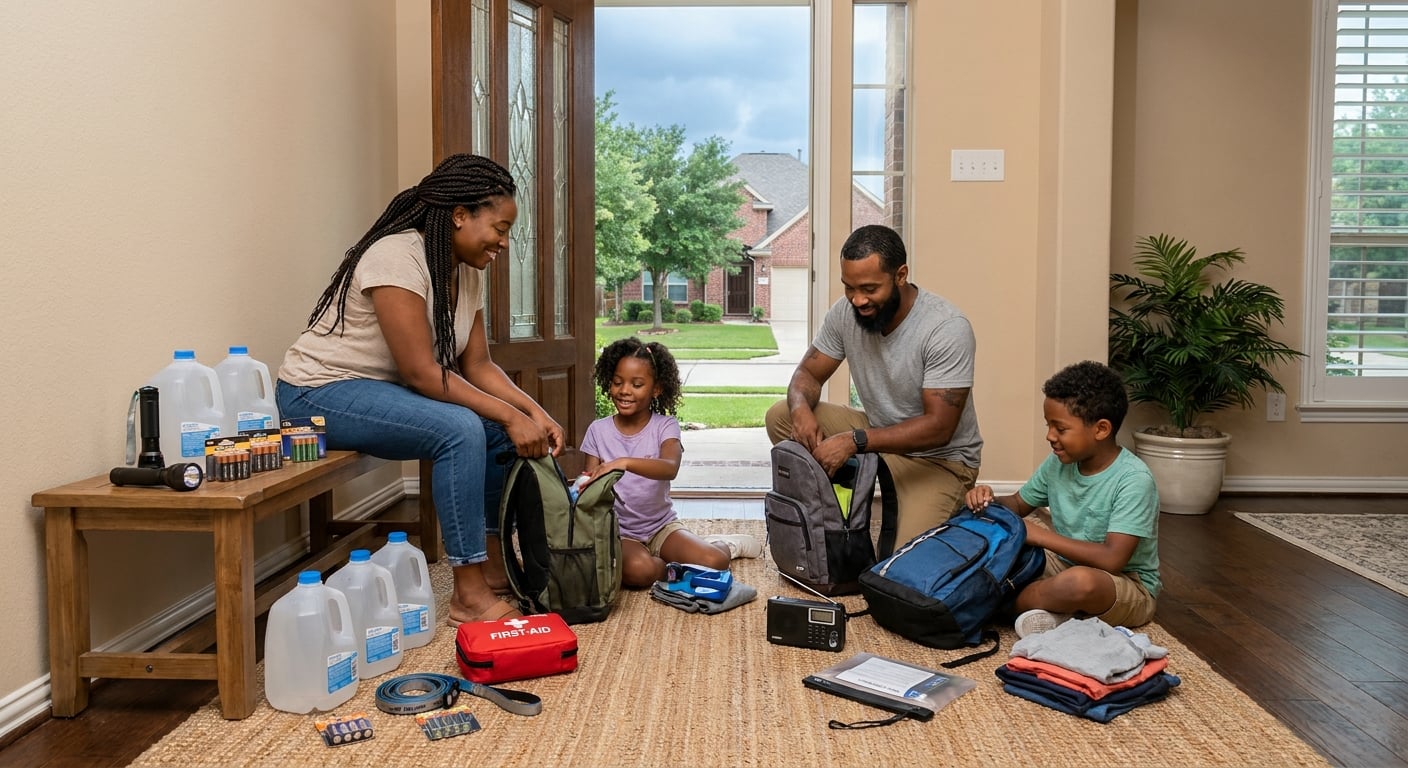
We talk to a lot of people who are buying their first home in San Antonio, and emergency preparedness almost never comes up in those early conversations. That's not a criticism. When you're focused on closing dates, moving trucks, and figuring out which neighborhood fits your life, stocking water and mapping evacuation routes just isn't top of mind. But San Antonio has a way of reminding you that it matters.
We put this guide together because the city has real, specific risks that are worth understanding before storm season, not during it.
Note: Alert systems, flood resources, and city emergency guidance can change over time. Always verify details with your local emergency management office.
Key Takeaways
San Antonio's main risks are flash floods, severe storms, heat waves, and surprise winter freezes.
A family emergency plan covers meeting places, evacuation routes, and how to reach each other when cell service gets unreliable.
A three-day supply of food and water is a practical baseline for San Antonio households, with one gallon of water per person per day.
AlertSA and REAN cover San Antonio and Bexar County. Registration is free and takes about five minutes.
Standard homeowners insurance does not cover flood damage. This applies whether you're inside or outside a flood zone.
Property readiness means knowing where your shutoffs are, documenting your belongings, and keeping copies of important records somewhere you can actually find them quickly.
Before a freeze, stock up on insulated outdoor faucet covers or valve covers to help protect exposed pipes.
When flooding threatens, avoid low-water crossings and leave early if conditions are deteriorating.
Which Emergencies Should Local Homeowners Plan For?
San Antonio Flash Floods and Severe Storms
San Antonio sits in one of the most flash-flood-prone corridors in the entire country. The city's emergency preparedness page puts flooding at the top of local hazards, and it's easy to see why once you've lived here through a few storms.
The thing people underestimate most, especially newcomers, is low-water crossings. San Antonio has hundreds of them, and they flood before the surrounding roads do. A crossing that looked totally fine an hour ago can have two feet of moving water by the time you circle back. "Turn around, don't drown" gets repeated so often here because it still needs to be said every year. When you're mapping your evacuation routes, build in at least two options that avoid low-water crossings entirely.
Hail and severe thunderstorms are also regular events. Straight-line winds can cause roof damage, down fences, and knock out power even when a storm does not feel especially dramatic at first.
Winter Freezes, Heat and Power Outages
San Antonio also deals with extended heat in summer and unpredictable freezes in winter. For homeowners, that means knowing how to protect pipes, where to go if your home loses heating or cooling for more than a day, and how to store medications that need refrigeration.
Before a hard freeze, stock insulated faucet covers or valve covers for outdoor spigots and any other vulnerable exposed plumbing. They are inexpensive, easy to store, and much easier to buy before shelves empty out ahead of a cold snap. It also helps to know where your nearest city cooling or warming center is before you actually need one.
How Do You Build a Family Emergency Plan?
A family emergency plan doesn't need to be a binder. A single page that every person in your household has seen is worth more than a detailed document sitting in a drawer.
Choose Meeting Places and an Outside Contact
Pick two spots: one right outside your home for emergencies like a fire, and one outside your neighborhood in case your street is blocked or inaccessible. Then choose one out-of-state contact that every household member can call or text.
Here's why the out-of-state part matters: during a local disaster, cell towers in the area get overloaded fast. Reaching someone in another state is often easier than reaching someone across town. Write those two locations and that number down on paper and keep copies in your car, your go-bag, and your wallet.
Plan for Children, Pets and Medical Needs
If you have kids in school, check whether the campus has its own emergency pickup procedure. District procedures can vary by school.
Pets need their own plan: a carrier or leash ready to grab, three days of food and water, and vaccination records in a waterproof sleeve.
If anyone in your household relies on power-dependent medical equipment, San Antonio recommends registering with the State of Texas Emergency Assistance Registry (STEAR). That registration helps emergency personnel prioritize outreach during a power event.
Save Local Alerts and Practice the Plan
San Antonio uses AlertSA for city notifications and REAN for Bexar County. They share a database, so one registration covers both.
Walk through your plan at least once a year. Before storm season starts is a good natural checkpoint.
What Belongs in a Home Emergency Kit?
Two versions are worth having: one full kit at home, and a smaller go-bag you can grab in under two minutes.
Store Food, Water and Medication
The Texas Ready checklist recommends a three-day baseline, which is a solid starting point for San Antonio households.
One gallon of water per person per day is the standard. For a family of four over three days, that's 12 gallons before you account for pets. Stock at least a 30-day supply of prescription medications, or as much as your insurer will authorize early.
Pack Power, Lighting and First-Aid Supplies
Item | Why It Matters |
|---|---|
Battery or hand-crank radio | Works when both power and cell service are down |
Flashlights and extra batteries | Phone flashlights drain your battery fast |
Portable phone charger | Buys you more time to communicate during an outage |
First aid kit | Urgent care and ER wait times often increase after major storms |
Cash in small bills | Card readers can go offline during outages |
Whistle | Signals for help if you're trapped and can't call |
Insulated faucet covers or valve covers | Helps protect outdoor plumbing during a freeze |
Build a Go-Bag and Vehicle Kit
Your go-bag is built for the scenario where you have ten minutes to leave. Keep it light and near the door you'd most likely exit from.
Pack copies of your ID, insurance cards, medications, phone chargers, a change of clothes, closed-toe shoes, and pet supplies if applicable. Your vehicle kit can carry extra water, a blanket, jumper cables, and a paper map of routes around the city since GPS isn't always reliable during widespread outages.
How Can You Prepare Your Home and Records?
This is the part most online checklists skip over. As people who work closely with homeowners across both cities, we've seen firsthand how much easier recovery goes when these things are sorted out in advance.
Secure the Roof, Yard and Drainage
The Texas Department of Insurance publishes a solid property checklist worth reviewing every spring: check your roof for loose shingles, confirm garage doors are wind-rated, clear gutters and downspouts, and secure anything in the yard that could become a projectile.
Also walk your drainage. If water pools against your foundation after a normal rainstorm, it will pool worse in a major event.
Locate Utility Shutoffs and Safety Devices
New homeowners are often surprised by how long it takes to find the gas shutoff, main water valve, and electrical panel in a house they just moved into. Spend fifteen minutes in your first week finding all three and photograph their locations. Keep a wrench or pliers accessible nearby.
Check that smoke and carbon monoxide alarms work and have fresh batteries. CO risk goes up significantly when generators are used improperly, which is exactly why the next section matters.
Use Generators and Backup Power Safely
Generators are genuinely useful during extended outages. They also cause deaths every year from improper use. The Texas Department of Insurance is clear: run any generator at least 20 feet from doors, windows, and vents, and never indoors or in a garage, even with the door open.
If you want to connect a generator to your home's electrical system, have a licensed electrician install a transfer switch. Running one directly into an outlet is dangerous.
Protect Insurance and Property Records
Before storm season, photograph every room, open every closet, and note serial numbers on major appliances. Store those photos off-site: a cloud account works, as does a waterproof USB drive at a family member's home in another city.
Keep accessible copies of your homeowners policy, flood insurance policy if you have one, deed, vehicle titles, Social Security cards, passports, and photo ID. A fireproof document box stored near your go-bag is a simple, practical setup.
When Should You Shelter or Evacuate?
This is the most consequential decision you'll make during a major event. Official agencies have a consistent answer: when an order is issued, follow it.
Follow Official Alerts and Evacuation Orders
A watch means conditions are possible. A warning means they're imminent. An evacuation order means officials have determined that staying is no longer a safe option.
In San Antonio, that often means acting early around flash flooding rather than waiting until roads become impassable. If conditions are deteriorating quickly, leaving sooner usually gives you more route options.
Identify the Safest Room in the Home
For wind events, move to an interior room on the lowest floor, away from windows. A closet or bathroom works well. For flooding, the guidance flips: go higher inside the home, but do not climb into a sealed attic where rising water could trap you.
Check Local Flood and Road Conditions
Bookmark these now:
San Antonio: BexarFlood.com for real-time gauge data and low-water crossing conditions
San Antonio area roads: local traffic and emergency updates through city and county alert systems
Never cross a flooded road. Six inches of moving water can knock a person down. Two feet can carry a vehicle.
One thing to do today: register for AlertSA. It's free, it takes five minutes, and it's the kind of thing you'll be glad you did before you ever need it.
Frequently Asked Questions
How Often Should I Replace Emergency Supplies?
Check expiration dates on food, water, and medications every six months, and swap out batteries at the same time. After any major household change, like a new baby, a new pet, or a new prescription, revisit the full kit.
Do I Need Flood Insurance Outside a Mapped Flood Zone?
Worth considering, yes. The Texas Department of Insurance confirms that standard homeowners policies exclude flood damage, and roughly 25 percent of flood insurance claims come from properties outside high-risk zones. Most policies also carry a 30-day waiting period before coverage kicks in.
Where Should I Store My Household Emergency Kit?
Keep it somewhere dry and accessible, ideally near the exit you'd use in a fast-moving situation. Your go-bag specifically works best right by your front or garage door.
What Should a New Homeowner Locate Right After Moving In?
Find your main water shutoff, gas shutoff, electrical panel, smoke and carbon monoxide alarms, emergency exits, and insurance policy documents. Doing this in your first week means you won't be searching during the worst possible moment.
Check out this article next